

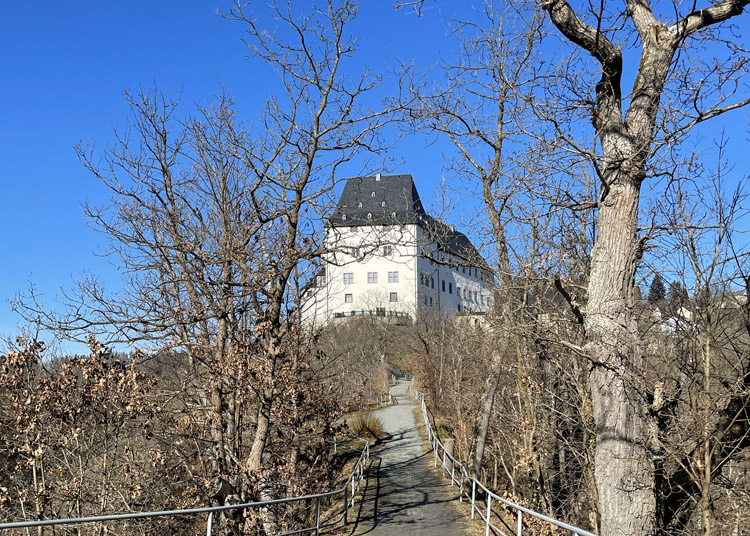
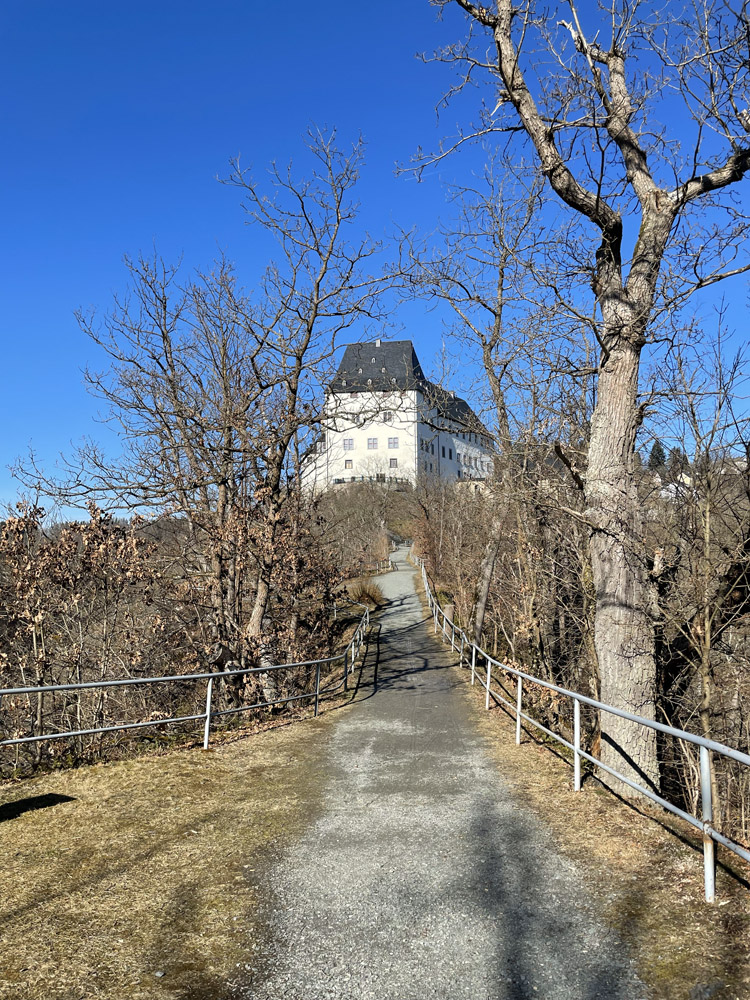
Schloss Burgk is a picturesque castle nestled in the slate mountains (Schiefergebirge) of the Thuringian part of the German Vogtland. Its architecture combines the luxurious elements of a palace with the defensive necessities of a castle. Stunning baroque interiors show off the skills of woodcarvers and offer a glimpse into the lives of the nobility.
How to get there
Schloss Burgk is located west of the town of Schleiz in the Naturpark Thüringer Schiefergebirge/Obere Saale. It can be reached by taking the A9 to exit 28 and following highway L1095. An impressive modern observation tower, the Saaleturm, marks the location of the parking lot and public restrooms. There is also a bus, number 611, that will take you from the bus station in Schleiz to Schloss Burgk.
Palace on a Hill
Schloss Burgk was built by the Reeves of Gera and Plauen. A “reeve” (Vogt, in German), was a noble who managed land and peasants in the service of the Holy Roman Emperor. The castle was first mentioned in an official document pledging the Reeves’ allegiance to the Teutonic Order in the year 1365. Based on this date, it is considered a late medieval castle.
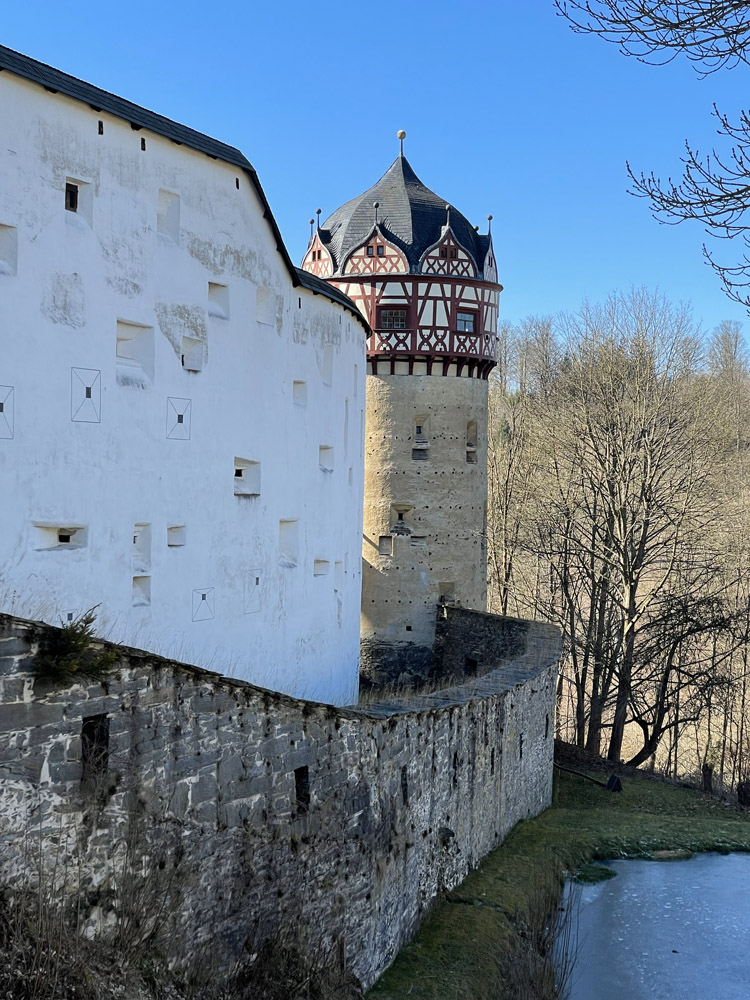
The Reeves of Gera lost the castle in the course of the three-year Vogtland War in 1357, and possession passed to the House of Reuss. In 1403, the castle was converted to a palace containing three main wings. In general, palaces tend to have larger windows than castles. Palaces, primarily defended by cannons and rifles, not by archers who hid behind arrow slits, could afford to let the light in.
Extensive modernization in the 16th century included beefing up the military defenses of the palace with a watchtower and more fortification of the curtain wall. This was not enough, however, to prevent its fall to the burgraves of Meissen in the Schmalkaldic war. In 1596, the palace became the property of a branch of the Reuss family. They resided at the castle until WWII.


Bloom where you’re planted
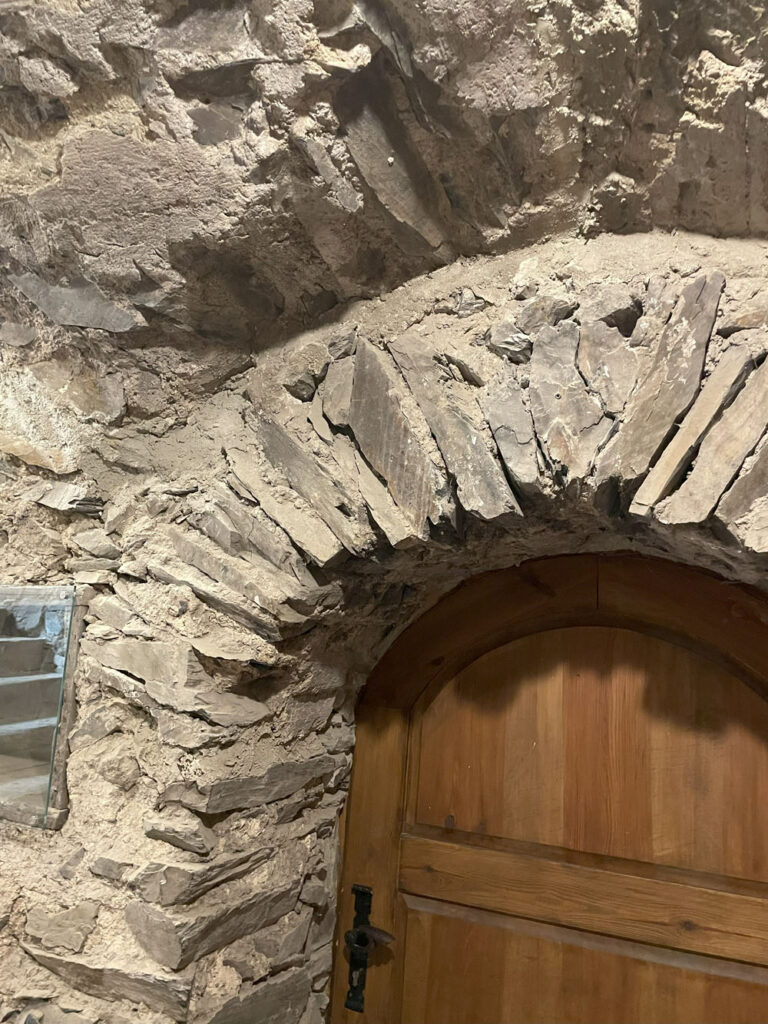
It’s one of the unavoidable realities of castle building that you use the building supplies nearby. No ox or donkey wants to haul stone more than a few meters, let alone hundreds of kilometers. Luckily, Schloss Burgk sits in a geological region where rock is in abundance.
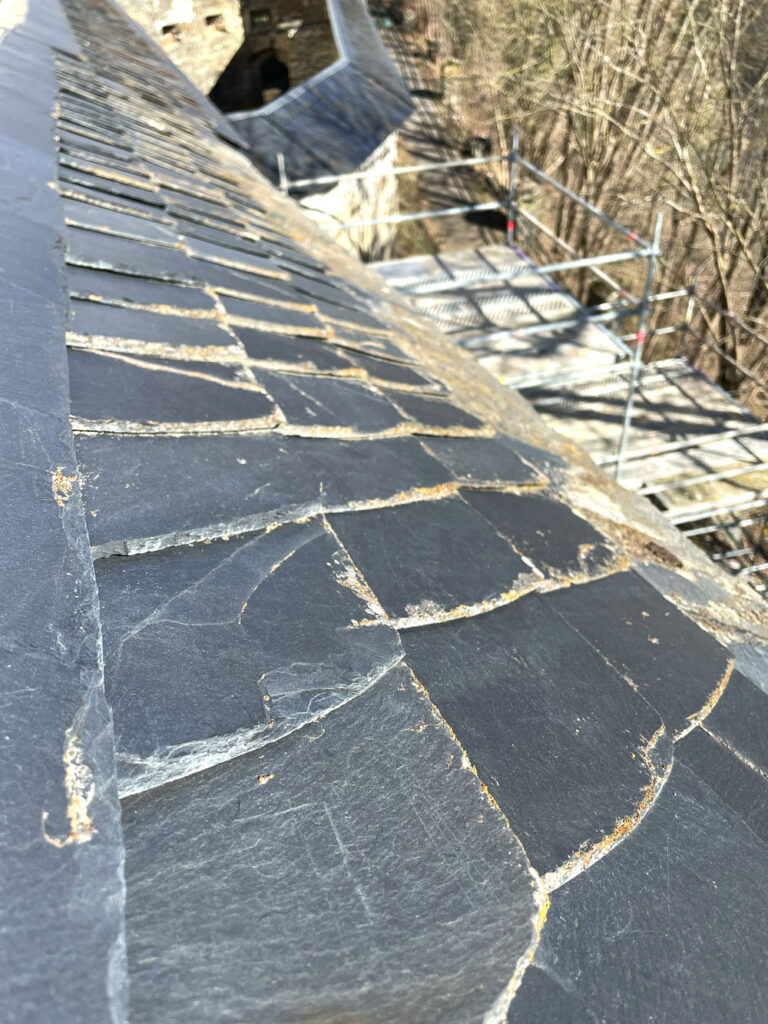
Slate is a foliated rock, meaning it has a layered structure. When struck at the correct angle, it splits into smooth flat sheets of stone ideal for use as flooring tiles, roofing tiles, and bricks. The photos below show all of these uses at Schloss Burgk.



The kitchen chimney of Schloss Burgk, at least partially constructed of slate, is 21.5 meters tall (over 70 feet), making it one of the largest medieval kitchen hoods in Germany.
Thuringian Farmer’s Baroque
In my research for this castle, I came across an artistic style referred to as “Thüringer Bauernbarock,” (Thuringian farmer’s baroque.) In Protestant areas of Thuringia, Bavaria and Bohemia after the Reformation, woodcarvers tried to distinguish their craft from the more ostentatious Catholic baroque by embracing rural themes.
Whether this is a true artistic genre separate from baroque is disputed by art historians, and many consider it merely a modern label to attract tourism. To me, the motifs of fruit, flowers, and skies seem more rural and less stylized than typical baroque. I’ve attached some photos. You can decide for yourself.
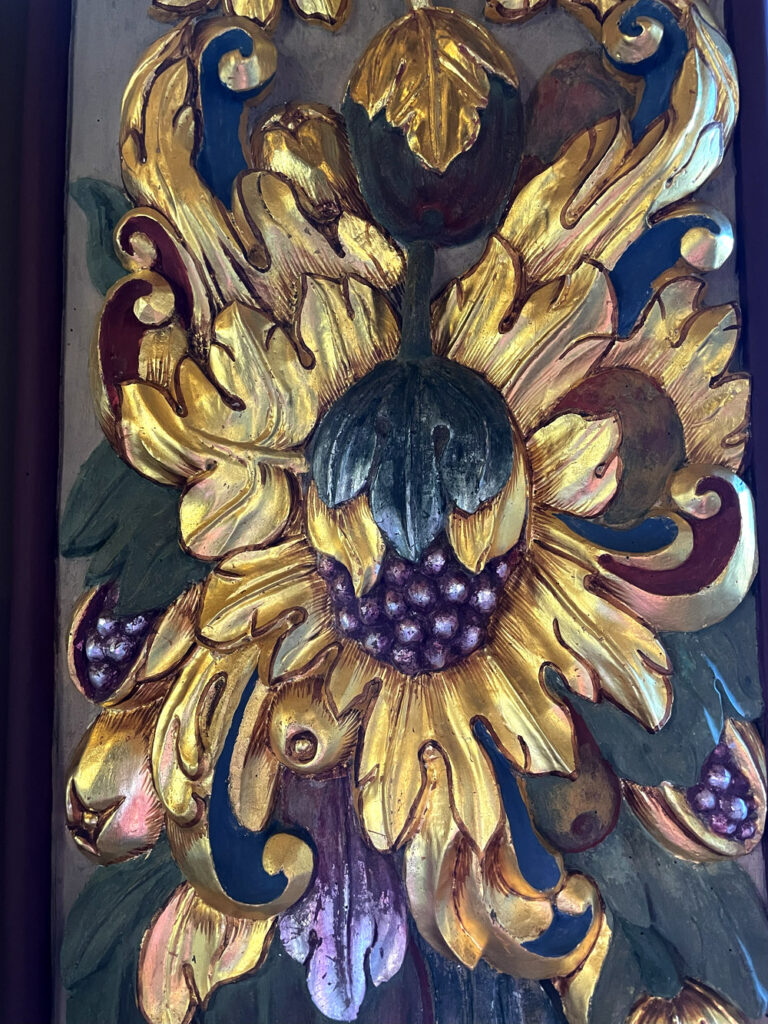

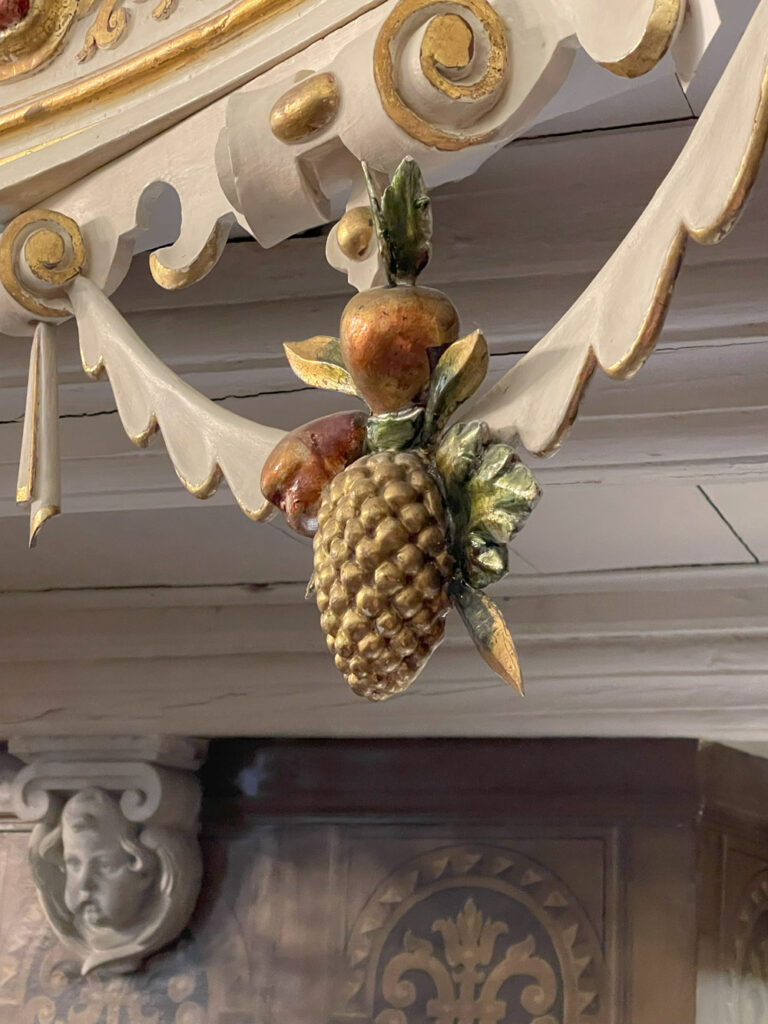


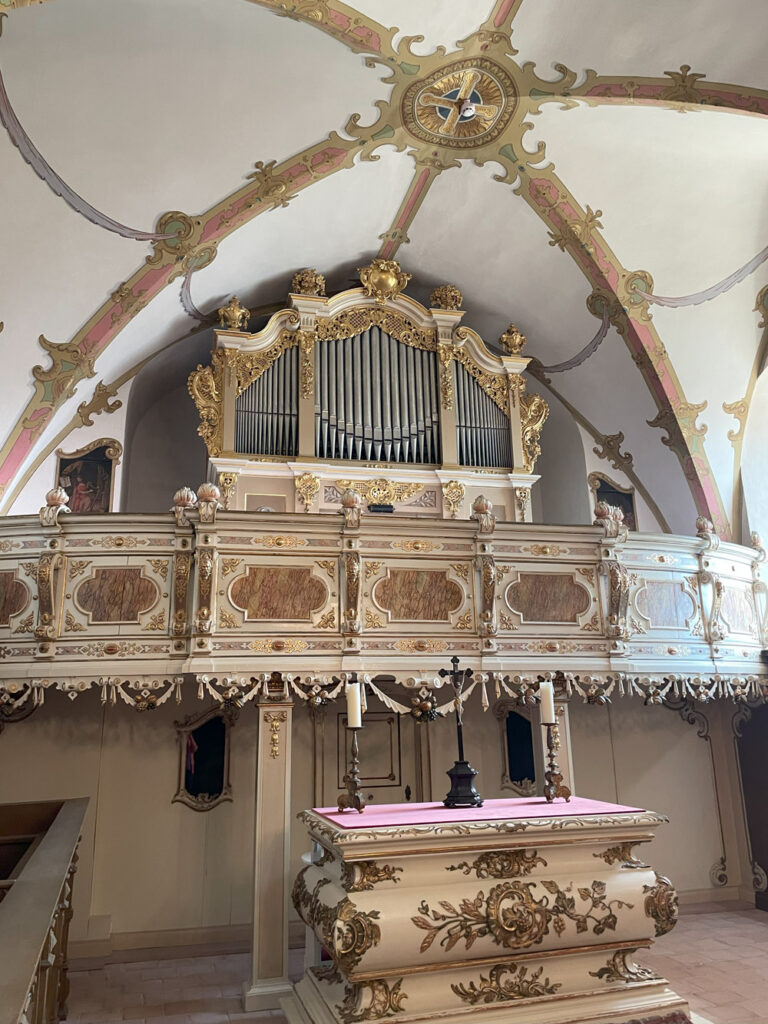
The last photo in this series shows the organ and altar in the chapel. Both, as well as the pulpit, were built by the organ builder, Gottfried Silbermann in 1743. Silbermann built 50 organs in his lifetime, and of those, 31 have survived in central Germany and are still played, a testament to his meticulous craftmanship.
If you’re intrigued by farmer’s baroque, there is a unique opportunity that I would like to make you aware of. At St. Matthew’s Church in the village of Neustadt am Rennsteig, you can rent a sleeping cot in a farmer’s baroque-decorated church and spend the night there. There are a few challenges to staying here. There is no grocery store or restaurant in the village, so plan ahead and bring your own dinner. And breakfast. Also, there are no sanitary facilities in the church, but a shower and toilet are available at the parish house next door. If you stay there, I would love to hear about your experience.
Toll Castles in the Middle Ages
In my hometown of Spokane, Washington, there was a toll bridge over the wildest part of the Spokane river and this bridge fascinated me as a kid. I always wanted to be the one to throw the dime in the basket at the Maple Street bridge, (yes, it was a dime, this was the 1970s), but this task was entrusted to my mom or dad. The toll increased to 25 cents by the time I could drive the bridge myself, and it somehow lost its appeal when I could spare a quarter by taking a different bridge.
Toll bridges are not a novel creation of the 1970s. Throughout the Holy Roman Empire, traveling merchants on trade routes were required to pay tolls at bridges, river crossings, harbors, and marketplaces. The revenue generated maintained the infrastructure of the trade routes, provided armed guards to protect merchants from highway robbers, and was a source of cash for the lord of the castle. This was big commerce, and the collection of tolls wasn’t entrusted to a simple basket like my Maple Street bridge example. Toll castles (Zollburgen) were regular fortresses with all of the typical defenses of one, and this is where the fees were paid.
Schloss Burgk was a toll castle. The wooden panel shown below lists the prices for crossing a bridge over the Saale river. Humans and small farm animals like calves, sheep, goats, and pigs cost one Pfennig (penny) each, a cart was 3 Pfennig, and for every cow or horse you led across that bridge, you had better have 4 Pfennigs ready to pay the toll.

The tolls are no longer in effect today. I was able to cross two bridges on my hike completely free of charge. There is a fee to enter the castle museum, though.
Sketching Schloss Burgk
To my delight, there was an exhibit of dozens of paintings of the castle by artists over the past century. Here is one of my favorites, painted by Rudolf Pöschmann of Dresden in 1912. I like the perspective from the covered bridge, looking up at the castle, and the expressive line work. Pöschmann was a contemporary of the painters of “Die Brücke,” the German Expressionist movement founded in 1905 in Dresden, and you can definitely see it in his style.
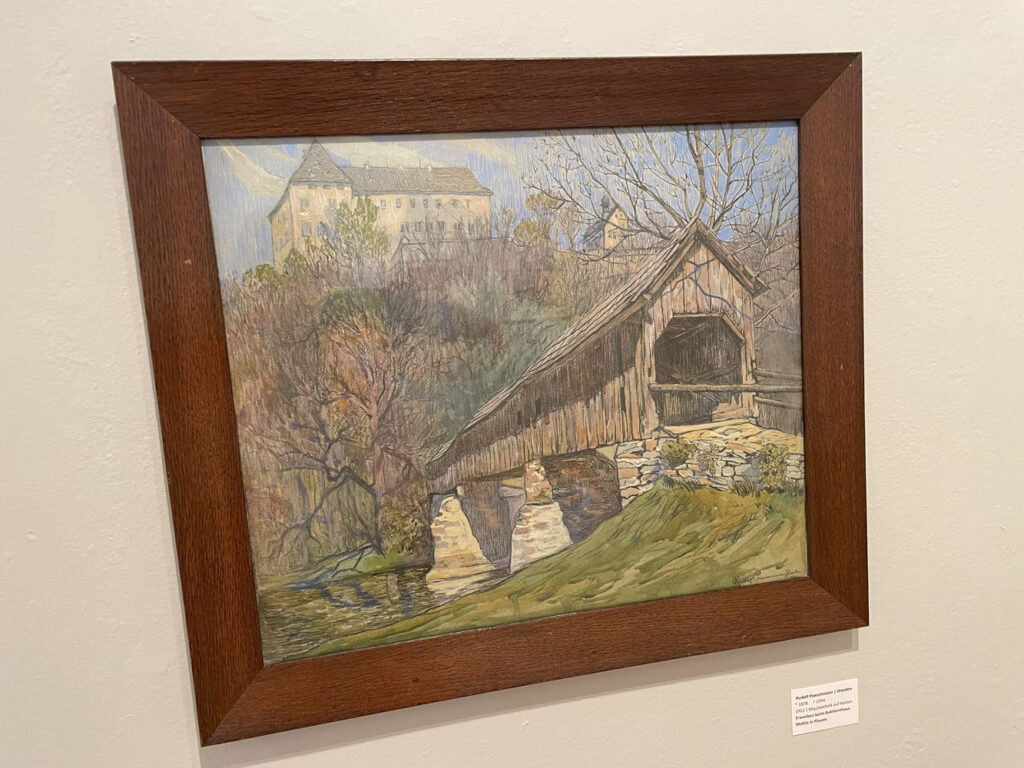
I made a few sketches of the castle, but none as impressive as Pöschmann’s painting.


Hiking Schloss Burgk
My hike started at the castle. I mostly followed this trail on Komoot, but I skipped the detour to the Gastes Altes Zollhaus, I parked at the castle and started from there. I strolled through the Sophienpark below the castle where there is a beautiful Rococo pavilion that you could rent for a wedding, if you like.
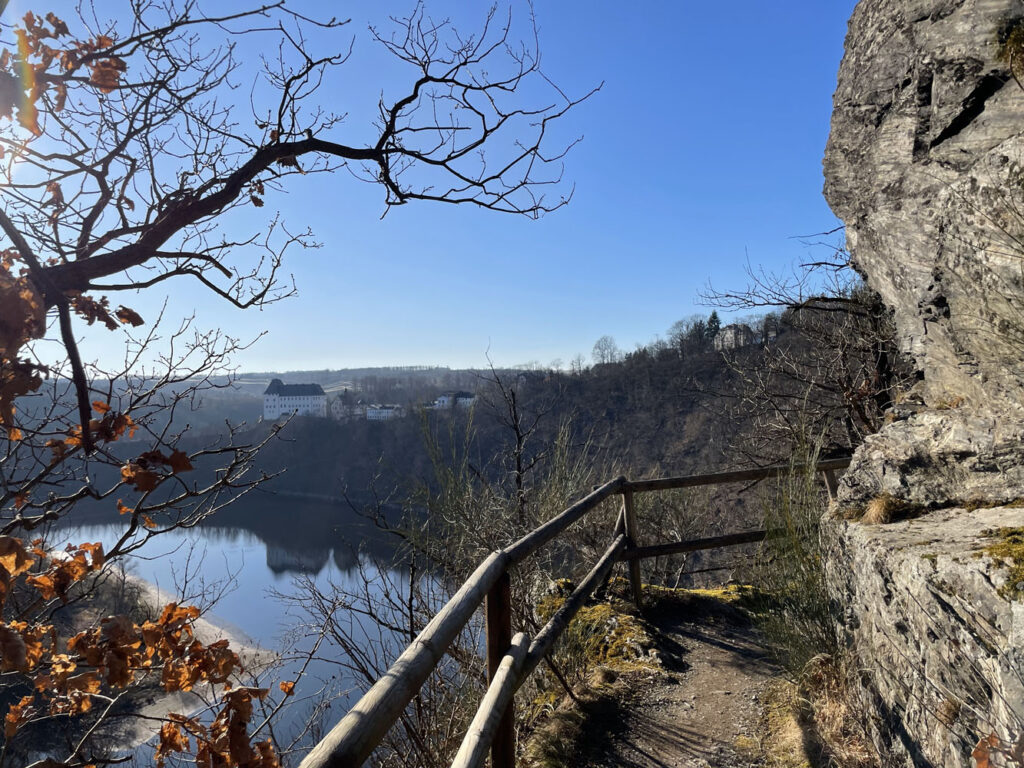
The trail enters the forest on the right side of the pavilion and gently switchbacks until you get to the Saale river. I’m a sucker for the vibrant greens and golds of moss and the forest was alive with it. One of the highlights of the hike is a panoramic view of the castle, elevated high above the river.


I hope you enjoyed this peak at Schloss Burgk. If you’ve ever been hiking in the Schiefergebirge, or have an opinion about the legitimacy of farmer’s baroque as an artistic style, let me know in the comments.
